

Advanced Regenerative Medicine
Advanced Regenerative Medicine
- The Goswami Clinic
Stem Cell Therapy for Spinal Stenosis: What to Know
Medically reviewed by Dr. Gaurav Goswami, MD — prepared October 2026
Stem cell therapy for spinal stenosis cannot widen a narrowed spinal canal, which is the defining feature of the condition. Because stenosis usually develops from degeneration of the discs, ligaments, and facet joints, regenerative treatments are sometimes considered for related sources of pain, particularly disc degeneration, where randomized trials suggest modest benefits. Anyone with stenosis who develops bowel or bladder changes or rapidly worsening leg weakness needs urgent medical evaluation.
Contact Us
What Is Spinal Stenosis?
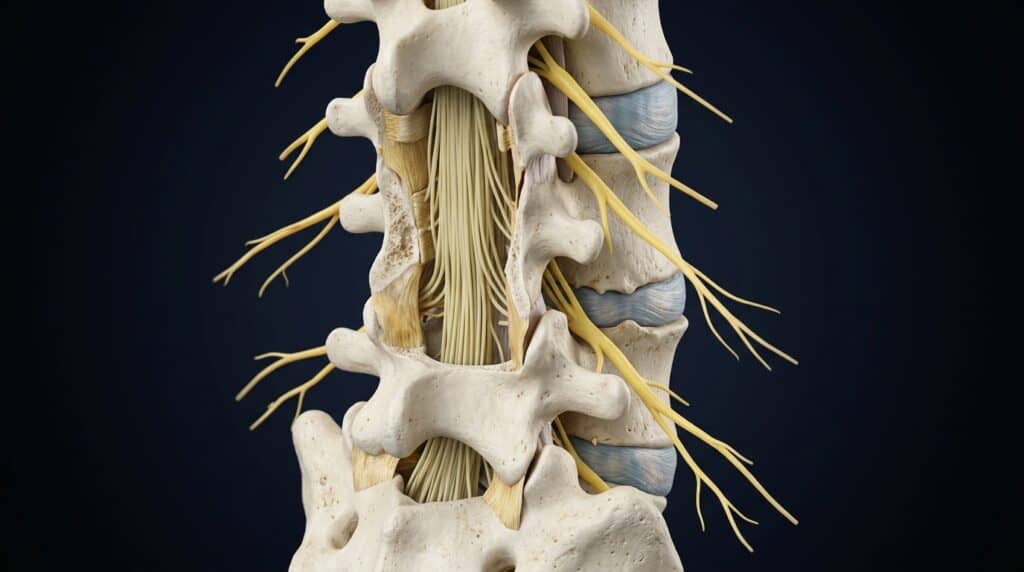
Spinal stenosis is a narrowing of the spaces in the spine that can put pressure on the spinal cord or nerve roots. In the lower back, it usually results from degeneration of the discs, the ligaments, or the facet joints that link the vertebrae, as Harvard Health Publishing explains. Most people who develop symptoms are 50 or older, according to Johns Hopkins Medicine.
According to a JAMA patient guide on lumbar spinal stenosis, common symptoms include pain and achiness that extend from the lower back into the buttocks and legs, sometimes with numbness or tingling. The pain typically worsens with standing or walking and eases with sitting or leaning forward, which is why many people with stenosis find walking easier while leaning on a shopping cart.
Contact Us
How Is Spinal Stenosis Diagnosed?
Diagnosis combines your symptoms and exam findings with imaging. As a review of lumbar spinal stenosis explains, the diagnosis is made by matching clinical symptoms with findings of a narrowed canal on CT or MRI. Imaging alone isn’t enough; what matters is whether the narrowing seen on the scan explains your symptoms.
Your physician will also check strength, reflexes, and sensation in your legs, because changes in these can show how much the nerves are affected.
Can Stem Cell Therapy Reverse Spinal Stenosis?
No. The narrowing in spinal stenosis is structural: thickened ligaments, enlarged facet joints, bone spurs, and bulging discs physically crowd the spinal canal. Stem cell therapy is not designed to remove bone or shrink thickened ligaments, and it has not been shown to widen the canal.
Any clinic suggesting otherwise is overstating what regenerative medicine can do. Being clear about this matters, because when stenosis compresses the nerves significantly, decompression surgery may be the appropriate treatment.
Where Might Regenerative Treatment Fit?
Spinal stenosis rarely exists in isolation. The same degenerative process that narrows the canal also affects the discs and joints of the spine, and those structures can be sources of pain in their own right. Regenerative medicine research has focused mainly on one of them: the degenerating disc.
A 2026 systematic review and meta-analysis of seven randomized trials found that intradiscal mesenchymal stem cell injections offered modest improvements in pain and function for people with chronic low back pain caused by degenerative disc disease who hadn’t responded to conservative treatment. That is meaningful research, but it studied disc-related back pain, not spinal stenosis itself.
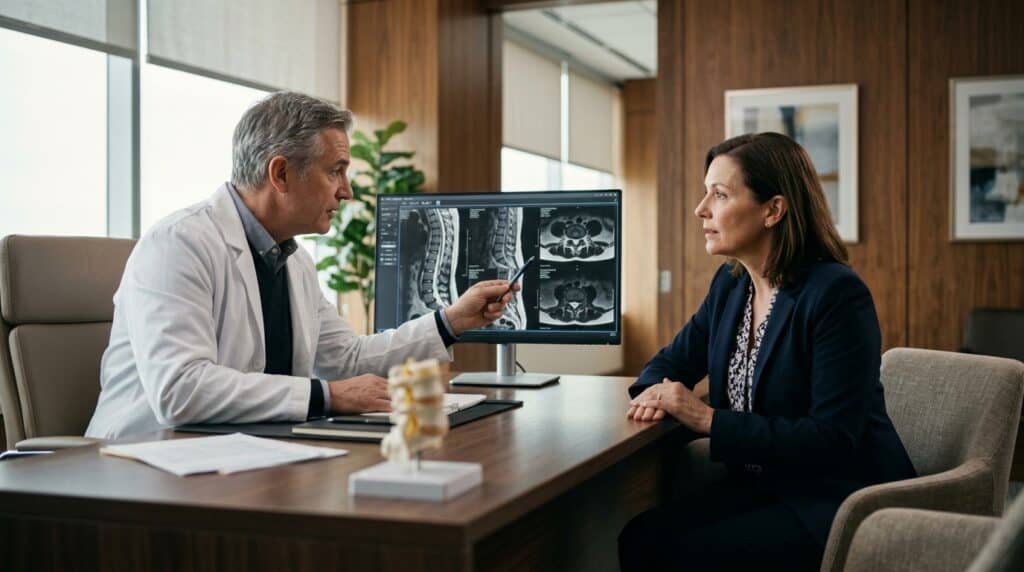
For some patients, the practical question becomes which structure is actually generating their pain. If leg symptoms come mainly from nerve compression, a regenerative injection is unlikely to address them. If a degenerating disc is a major contributor to back pain alongside mild stenosis, a regenerative approach may be worth discussing. Our stem cells for spine page explains how we evaluate these cases.
What Are the Standard Treatments for Spinal Stenosis?
Most people start with conservative care. Harvard Health notes that initial treatment typically includes pain relievers, anti-inflammatory medicines, and sometimes corticosteroid injections, with surgery often the next step if symptoms don’t improve. Physical therapy deserves particular attention: in a study of 169 people with lumbar spinal stenosis described by Harvard Health, a structured physical therapy program delivered results comparable to decompression surgery, with less risk.
Epidural steroid injections can also help in the short term. A review of lumbar spinal stenosis treatment notes that several studies found short-term symptom relief in roughly 50% to 87% of cases. When nerve compression is significant and conservative care fails, decompression surgery removes the structures pressing on the nerves.
Which Symptoms Need Urgent Medical Attention?
Some symptoms are emergencies, not candidates for elective treatment of any kind. The JAMA patient guide advises that anyone with spinal stenosis who develops loss of bowel or bladder function or rapidly progressive leg weakness should undergo urgent evaluation for surgery. These can be signs of severe nerve compression, including a condition called cauda equina syndrome.
If you experience these symptoms, seek emergency care immediately rather than scheduling a consultation.
Who Might Consider a Regenerative Approach?
A regenerative approach may be worth discussing if your imaging shows mild-to-moderate stenosis without severe nerve compression, you have no red-flag symptoms, a degenerating disc or other structure appears to contribute to your pain, and conservative care hasn’t provided enough relief. It is not a substitute for surgery when significant nerve compression is causing weakness or other neurological changes.
Related conditions such as disc injuries, pinched nerves, and chronic low back pain are evaluated the same way, by matching the treatment to the true source of symptoms. Our article on stem cell therapy for herniated discs discusses disc-related pain in more detail.
How Does The Goswami Clinic Evaluate Spinal Stenosis?
Every spine evaluation starts with your history, a neurological and physical exam, and a careful review of MRI or other imaging to identify where narrowing occurs and which structures are involved. If a regenerative option is reasonable, spinal procedures are performed under image guidance. If surgery or another specialist is the better path, we’ll tell you. Bring any recent MRI or CT reports to your consultation.
Learn more about our spinal stenosis treatment approach.
Frequently Asked Questions
Can stem cells cure spinal stenosis?
No. Spinal stenosis is a structural narrowing of the spinal canal, and stem cell therapy has not been shown to widen it. Regenerative treatment may be considered for related pain sources, such as disc degeneration, in selected patients.
Is stem cell therapy an alternative to spinal stenosis surgery?
Not when significant nerve compression is causing weakness or other neurological changes. In milder cases, it may be one option to discuss for related pain sources after conservative care, but it does not decompress the nerves.
What symptoms of spinal stenosis are an emergency?
Loss of bowel or bladder control or rapidly worsening leg weakness requires urgent medical evaluation. Seek emergency care right away if these occur.
Does physical therapy help spinal stenosis?
Yes, for many people. In a study of 169 patients described by Harvard Health, a structured physical therapy program produced results comparable to decompression surgery, with less risk.
Can spinal stenosis get worse over time?
It can. Stenosis develops gradually, and for some people the pain worsens over time and increasingly limits activity. Regular follow-up helps catch important changes, such as new leg weakness.
Does stem cell therapy for the spine use my own cells?
In autologous protocols, yes. Cells are collected from your own bone marrow or fat, concentrated, and placed under image guidance. Ask any provider exactly what is being used and how it is prepared.
Is stem cell therapy for the spine FDA-approved?
No. The FDA’s consumer alert notes that no such product has been approved for orthopedic conditions, including disc disease and back pain.
Want a clear explanation of what’s causing your symptoms? Schedule a free phone consultation with our team.