

Advanced Regenerative Medicine
Advanced Regenerative Medicine
- The Goswami Clinic
Stem Cell Therapy for Shoulder Pain: What the Research Shows
Medically reviewed by Dr. Gaurav Goswami, MD — prepared October 2026
Stem cell therapy for shoulder pain is most often explored for rotator cuff problems and shoulder arthritis. The strongest research so far involves stem cells added during surgical rotator cuff repair, where a 2025 meta-analysis found lower retear rates (17.7% versus 35%) but similar pain and function compared with surgery alone. For people seeking a non-surgical option, image-guided injection is used, the evidence is earlier-stage, and candidacy depends heavily on the type and severity of the problem.
Contact Us
Which Shoulder Problems Is Stem Cell Therapy Used For?
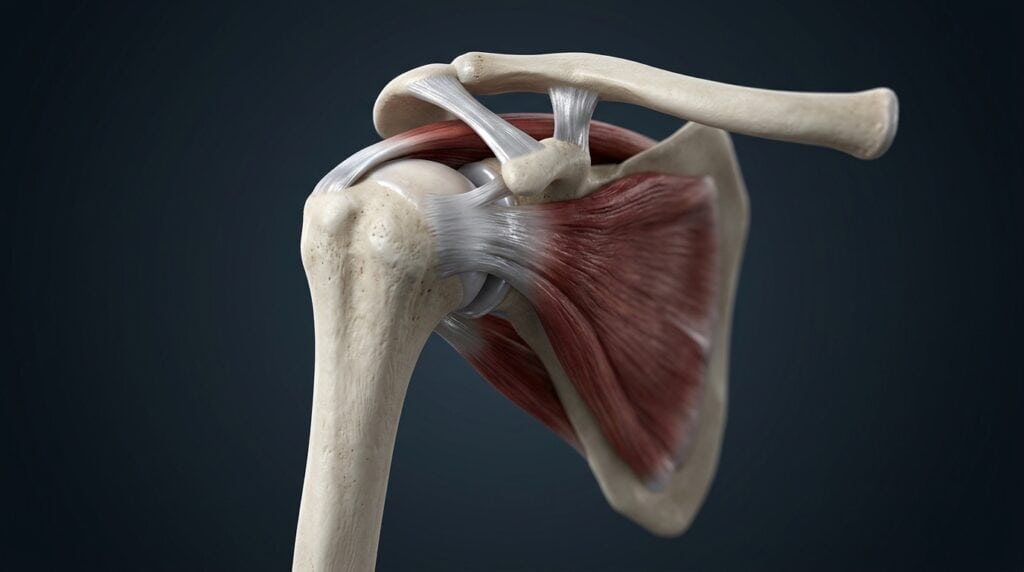
The shoulder conditions most often considered for regenerative treatment include rotator cuff tendinopathy (irritation and degeneration of the rotator cuff tendons), partial-thickness rotator cuff tears, and osteoarthritis of the shoulder joint. These are conditions in which tissue quality and healing capacity play a central role.
Large, full-thickness tears, especially those in which the tendon has pulled away and retracted, are often best addressed surgically. Our article on rotator cuff tears explains how tears are classified and treated.
Contact Us
What Causes Rotator Cuff Problems, and How Do They Feel?
Rotator cuff tears have two main causes, injury and degeneration, according to OrthoInfo from the American Academy of Orthopaedic Surgeons. Tears from a fall or other injury usually cause sudden, intense pain, while degenerative tears develop gradually with age-related wear, often aggravated by repetitive shoulder motion.
Common symptoms include pain at rest and at night, especially when lying on the affected shoulder; pain when lifting and lowering the arm; and weakness when lifting or rotating the arm. Everyday tasks such as combing your hair or reaching behind your back can become difficult. Some tears cause little pain but still lead to weakness, which is one reason a proper exam and imaging matter.
What Does the Research Show?
Much of the strongest shoulder research looks at stem cells used to support surgical repair. A 2025 meta-analysis of comparative studies found that patients who received mesenchymal stem cell augmentation during arthroscopic rotator cuff repair had a retear rate of 17.7%, compared with 35% after repair alone. Pain and functional scores, however, were similar between the two groups.
Longer-term data point in the same direction. As summarized in a review of stem cell therapies for rotator cuff healing, one 10-year case-control study found that 87% of patients who received bone marrow stem cells during repair had not experienced a retear, compared with 44% of those who did not receive them.
These findings suggest stem cells may help repaired tendon tissue heal more durably. Because they come mainly from surgical settings, though, they don’t automatically apply to injections given without surgery.
What About Stem Cell Injections Without Surgery?
For people with rotator cuff tendinopathy or partial tears who want to avoid surgery, stem cell therapy for the rotator cuff is delivered by injection. Because much of the comparative research has involved surgery, evidence specific to injection-only treatment is more limited, so it’s important to discuss realistic expectations for your specific diagnosis.
Treatment is often paired with a structured rehabilitation program, because strengthening the muscles that support the shoulder is a core part of recovering from rotator cuff problems.

Why Does Image Guidance Matter in the Shoulder?
The shoulder packs several tendons, a bursa, and the joint itself into a small area, so precise placement matters. An umbrella review of systematic reviews found that ultrasound-guided injections were generally more accurate than landmark-guided injections, with the clearest advantage in the shoulder, although results for pain and function varied between studies.
Ultrasound lets the physician see the tendon, the bursa, and the needle in real time, which helps confirm that treatment reaches the intended tissue.
Stem Cells, PRP, or Cortisone: Which Is Right for Shoulder Pain?
Each option plays a different role. Cortisone injections can calm inflammation and relieve pain for a period, but they are not designed to repair tissue. PRP uses concentrated platelets from your own blood and is often considered for tendon problems. Stem cell therapy uses concentrated cells from your bone marrow or fat with the aim of supporting tissue healing.
The right choice depends on your diagnosis, the size of any tear, tissue quality, prior treatments, and your goals. Our shoulder pain treatment page outlines the full range of options we offer.
Who May Be a Candidate?
You may be a reasonable candidate if imaging shows rotator cuff tendinopathy, a partial-thickness tear, or mild-to-moderate shoulder arthritis; your symptoms haven’t improved enough with physical therapy and activity changes; and you’re looking for an alternative to surgery or a way to support healing. Athletes and active adults often fall into this group, and our sports injury treatment program addresses many related problems.
If imaging shows a large, retracted full-thickness tear, surgical repair is often the better first step, and a physician should tell you so directly.
What Does Rehabilitation Involve?
Rehabilitation is central to recovering from rotator cuff problems. The American Academy of Orthopaedic Surgeons notes that it plays a critical role in both nonsurgical and surgical treatment of rotator cuff tears.
A program typically progresses from protecting the treated tissue, to restoring range of motion, to rebuilding strength in the rotator cuff and the muscles that stabilize the shoulder blade. Your physician and physical therapist will tailor the pace to your diagnosis and goals, and will advise when it’s safe to return to sports, lifting, or overhead work.
What Should You Expect From Treatment?
Treatment follows the same general steps as for other joints: an evaluation and imaging review, collection of cells from your own bone marrow or fat, same-day processing, and an ultrasound-guided injection into the targeted tissue. Most people go home the same day.
Temporary soreness is common for several days. Improvement, when it occurs, tends to develop gradually over weeks to months, and most plans pair treatment with a progressive rehab program. Your physician will guide you on when to return to lifting, throwing, or overhead activity.
Frequently Asked Questions
Can stem cells heal a torn rotator cuff without surgery?
For tendinopathy and some partial-thickness tears, stem cell injections may be considered as a non-surgical option, though evidence for injection alone is more limited. Large, retracted full-thickness tears usually need surgical repair.
Is stem cell therapy better than surgery for the shoulder?
They serve different purposes. The strongest current evidence shows that stem cells added during surgery reduced retear rates, while pain and function were similar to surgery alone. Your diagnosis determines which approach makes sense.
Is stem cell therapy for the shoulder FDA-approved?
No. The FDA has not approved any stem cell product for orthopedic conditions, including shoulder pain.
Will I need physical therapy after a shoulder stem cell injection?
Most treatment plans include a progressive rehabilitation program, because strengthening the muscles around the shoulder supports recovery from rotator cuff problems.
Is shoulder stem cell therapy covered by insurance?
Generally, no. Because no stem cell product is FDA-approved for orthopedic conditions, insurers and Medicare typically don’t cover it, and most patients pay out of pocket.
Can stem cell therapy help shoulder arthritis?
It may be considered for mild-to-moderate shoulder osteoarthritis in selected patients, although research is more limited than for the knee. Advanced shoulder arthritis is often better addressed with other treatments, including surgery.
How long until my shoulder feels better?
Improvement is usually gradual over weeks to months. Temporary soreness after the injection typically settles within about a week.
Ready to find out whether your shoulder is a candidate? Schedule a free phone consultation with our team.