

Advanced Regenerative Medicine
Advanced Regenerative Medicine
- The Goswami Clinic
PRP Knee Therapy in Newport Beach
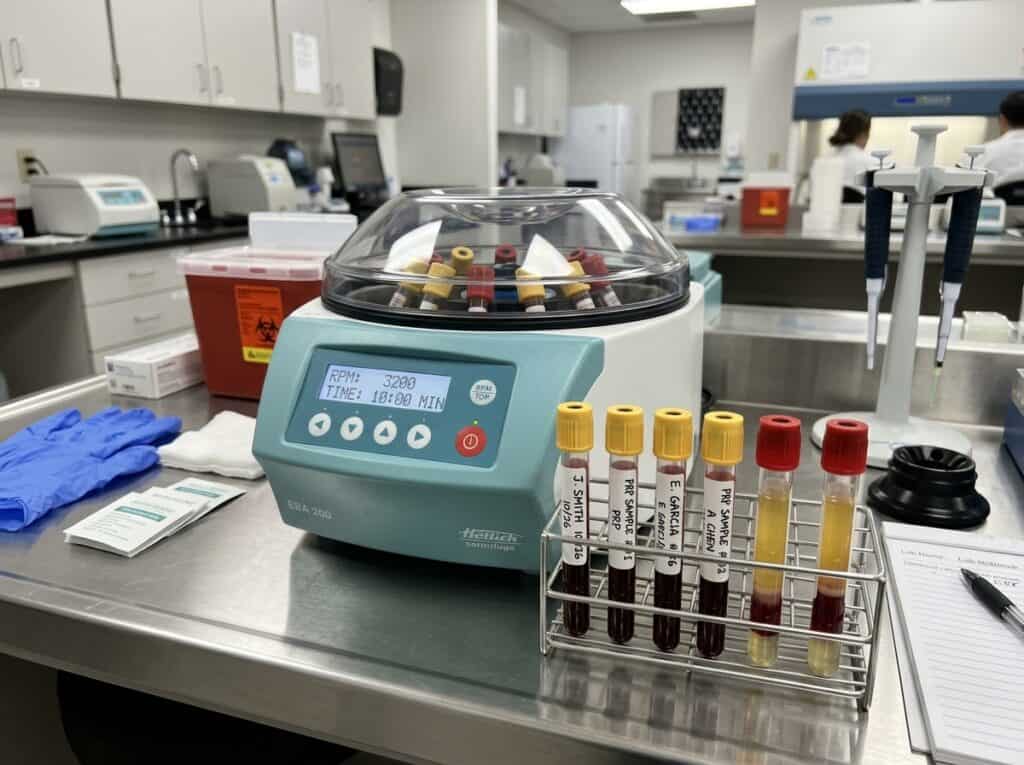
PRP knee therapy involves drawing a small sample of your own blood, concentrating the platelets in a centrifuge, and injecting that concentrate into the knee — typically under image guidance — to help support the body’s natural healing response in cases like knee osteoarthritis or mild-to-moderate cartilage wear.
Contact Us
What Is PRP, and Why Is It Used in the Knee?
Platelet-rich plasma (PRP) therapy uses a concentrated portion of your own blood’s platelets, which contain growth factors involved in the body’s healing process. The knee is one of the most common areas PRP is used because osteoarthritis and cartilage wear there are so widespread, and because the joint is relatively accessible for an image-guided injection compared with some other joints.
Because PRP is derived entirely from your own blood, it avoids many of the concerns associated with donor-based materials, and the collection process is similar to routine bloodwork most patients have already experienced at some point.
Contact Us
What Happens During a PRP Knee Appointment?
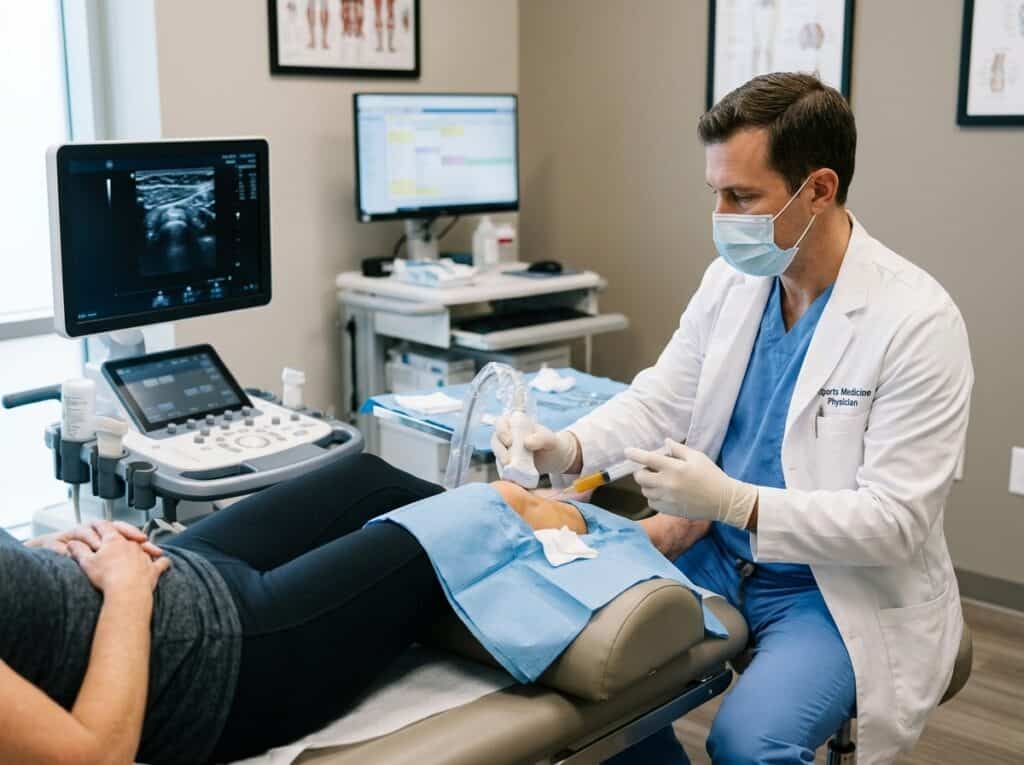
A typical visit starts with a review of your history and imaging, if you haven’t already had that evaluation. From there, the process generally follows a few clear steps: a standard blood draw, similar to routine lab work; spinning that sample in a centrifuge to separate and concentrate the platelets, which usually takes several minutes; preparing the knee and injection site; and then injecting the concentrate directly into the joint, typically guided by ultrasound to help confirm accurate placement.
The entire visit is generally completed in well under an hour, with no incisions and no general anesthesia involved. Most patients are able to leave shortly after the injection, though your physician may recommend a brief period of rest or monitoring immediately afterward.
What Does Recovery Typically Look Like?
It’s common to notice some soreness or swelling at the injection site for the first two to three days, similar to what you might feel after a strenuous workout. This initial reaction is often considered a normal part of the process, since it reflects the body’s response to the concentrated platelets at the site.
From there, improvement tends to be gradual rather than immediate, often unfolding over several weeks as the tissue responds. Your physician will typically give you specific guidance on activity modification during that window — for example, easing back into higher-impact activity gradually rather than all at once — based on your condition and goals. Most practices schedule a follow-up visit to check progress and decide whether any additional treatment is appropriate.
How Is PRP Different From Stem Cell Therapy for the Knee?
PRP concentrates the platelets and growth factors already circulating in your blood, while stem cell therapy uses reparative cells typically sourced from your own bone marrow or fat tissue. Some treatment plans use one approach on its own; others combine both as part of a broader joint injection strategy. Which approach — or combination — makes sense depends on the specific condition being treated, its severity, and your physician’s evaluation.
Who Might Be a Good Candidate for PRP Knee Therapy?
PRP tends to be considered for patients with mild-to-moderate knee osteoarthritis or tendon-related knee pain, particularly those looking to avoid or delay more invasive treatment such as joint replacement. It is generally not expected to reverse very advanced, bone-on-bone arthritis, which is why an honest look at your imaging is an important part of deciding whether PRP — stem cell therapy, or some other approach entirely — is the better fit. Patients weighing PRP against surgery may also find it helpful to review our alternative to knee replacement page.
It’s also worth having a direct conversation about your specific goals — whether that’s reducing pain during a particular activity, delaying surgery as long as reasonably possible, or simply avoiding daily medication — since PRP tends to work best as part of a plan built around a clear, realistic objective rather than a vague hope for general improvement.
What Should You Do to Prepare for a PRP Knee Appointment?
Preparation is usually straightforward. Physicians commonly recommend avoiding anti-inflammatory medications such as ibuprofen or naproxen for a period of time before the appointment, since these medications can interfere with the platelet activity PRP relies on — your physician will give you specific timing guidance based on your medications and health history. Staying well hydrated before your blood draw can also make the process a bit more comfortable.
Most patients are able to drive themselves home afterward, though it’s reasonable to arrange a ride if you tend to feel lightheaded after blood draws. Wearing loose-fitting clothing that allows easy access to the knee can also make the appointment go a little more smoothly.
What Does the Research Say About PRP for Knee Osteoarthritis?
A growing body of clinical research has looked specifically at PRP for knee osteoarthritis. A 2025 systematic review and meta-analysis of randomized controlled trials evaluating PRP for knee osteoarthritis described it as a promising biologic therapy, while noting that conventional treatments are often limited by temporary symptom relief. Separately, a systematic review and network meta-analysis that identified 56 randomized trials covering 5,251 patients — 53 of those trials, with 5,031 participants, entered the network analysis itself — examined whether differences in PRP preparation — including platelet concentration and whether white blood cells are included — affect pain and functional outcomes.
That second point is worth understanding as a patient: because study protocols differ in how PRP is prepared, comparing results across different research papers isn’t always straightforward, and “PRP” is not a single standardized product. That’s one more reason your physician’s specific protocol and experience matter as much as PRP as a general concept.
Results vary from study to study, and some research suggests benefits can last for a number of months in appropriately selected patients, though PRP is not expected to work identically for everyone. As with any regenerative approach, individual results depend on the severity of the underlying condition and a range of patient-specific factors best discussed directly with your physician.
Frequently Asked Questions
How many PRP injections does the knee usually need?
This varies by patient and condition. Some treatment plans call for a single injection, while others involve a short series spaced weeks apart. Your physician will recommend a specific plan based on an individual evaluation.
Does a PRP knee injection hurt?
Most patients describe the injection as causing brief discomfort rather than significant pain, and a local anesthetic is often used at the injection site to help with comfort during the procedure.
Is PRP knee therapy covered by insurance?
PRP is generally considered an elective treatment and is typically billed on a cash-pay basis. Our team can walk you through pricing during a free phone consultation.
Is PRP better than a cortisone shot for knee pain?
Cortisone often provides faster short-term relief from inflammation, while PRP is aimed at supporting the tissue over a longer time frame. Some patients try PRP after cortisone stops providing adequate relief, though the right sequence and choice depends on your specific situation — a conversation worth having directly with your physician.
Can PRP be combined with stem cell therapy in the same visit?
Some treatment plans do combine PRP with stem cell therapy or other elements of a broader joint injection strategy. Whether that combination makes sense for you is an individualized decision made during your evaluation.
What should I avoid after a PRP knee injection?
Most physicians recommend avoiding anti-inflammatory medications for a period after the injection as well, since they can blunt the healing response PRP is designed to support. You’ll also typically be advised to ease back into higher-impact activity gradually rather than resuming intense exercise right away. Your physician will give you a specific list of guidance tailored to your treatment and your knee’s condition.
Wondering if PRP is right for your knee? Learn more about PRP therapy or schedule a free phone consultation with our team.