

Advanced Regenerative Medicine
Advanced Regenerative Medicine
- The Goswami Clinic
MUSE Cell Therapy Explained
MUSE cells — short for Multilineage-differentiating Stress-Enduring cells — are a naturally occurring, pluripotent-like subpopulation of mesenchymal stem cells first identified in 2010. They’re known for surviving harsh isolation conditions and for their tendency to travel toward damaged tissue, which is why some regenerative medicine protocols specifically isolate them from a patient’s own bone marrow or fat.
Contact Us
What Are MUSE Cells?
MUSE cells were first identified in 2010 by a research group led by Dr. Mari Dezawa at Tohoku University in Japan. They occur naturally in several of the body’s own connective tissues — including bone marrow, fat, skin, and peripheral blood — as a distinct subpopulation within the broader family of mesenchymal stem cells. Researchers identify them using a specific surface marker, SSEA-3, which is what allows them to be distinguished from the rest of a mesenchymal stem cell population during processing.
Because MUSE cells reside naturally in tissue you already have — rather than needing to be created in a lab through genetic reprogramming — they can be collected as part of a standard autologous bone marrow or fat tissue sample, without a separate harvesting step.
Contact Us
How Are MUSE Cells Different From Other Stem Cells?
A few properties set MUSE cells apart in the research literature. Unlike embryonic stem cells or induced pluripotent stem cells, MUSE cells have been described in studies to date as non-tumorigenic, meaning they haven’t been shown to form the tumors that are a well-known concern with those other pluripotent cell types. They’re also notably stress-tolerant — able to survive processing conditions, such as enzymatic digestion, low-oxygen environments, or extended time in culture, that would eliminate most other cell types — and they’re self-renewing, meaning they can reproduce themselves rather than being a fixed, one-time supply.
Perhaps most notably, published research describes MUSE cells as having the ability to differentiate into cell types representative of all three embryonic germ layers, and as tending to migrate toward sites of tissue damage or inflammation once introduced into the body. A 2026 systematic review in Stem Cells Translational Medicine describes MUSE cells as a promising, non-tumorigenic pluripotent alternative for regenerative medicine and tissue engineering, while emphasizing the need for standardized isolation protocols to ensure reproducible results across laboratories.
It’s worth being straightforward about the limits here as well: that same review notes that the existence of MUSE cells as a truly distinct population, and the extent of their pluripotency, remain debated within the scientific community. This is an active and evolving area of research, best understood as a promising and well-documented research direction rather than a settled, final picture.
Why Does Stress Tolerance Matter in a Clinical Setting?
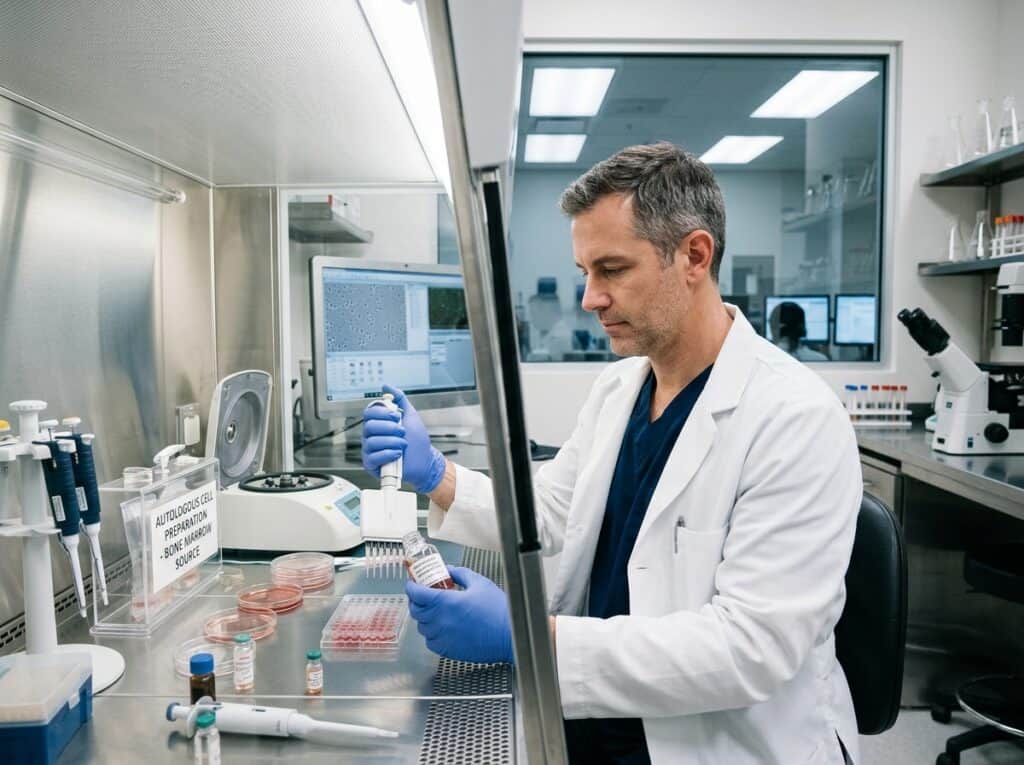
It’s a fair question why a cell’s ability to “survive stress” would matter to a patient. The answer has to do with what happens between collection and injection: the process of extracting, concentrating, and preparing cells for reintroduction into the body is itself a demanding process for those cells to survive. A cell population that is more likely to remain viable through that process — rather than being significantly reduced in number or function along the way — represents, at least in theory, a more consistent and reliable portion of what ultimately gets injected. This is the practical rationale behind why some regenerative medicine protocols specifically pay attention to this particular subpopulation rather than treating all mesenchymal stem cells as interchangeable.
How Do MUSE Cells “Home” to Damaged Tissue?
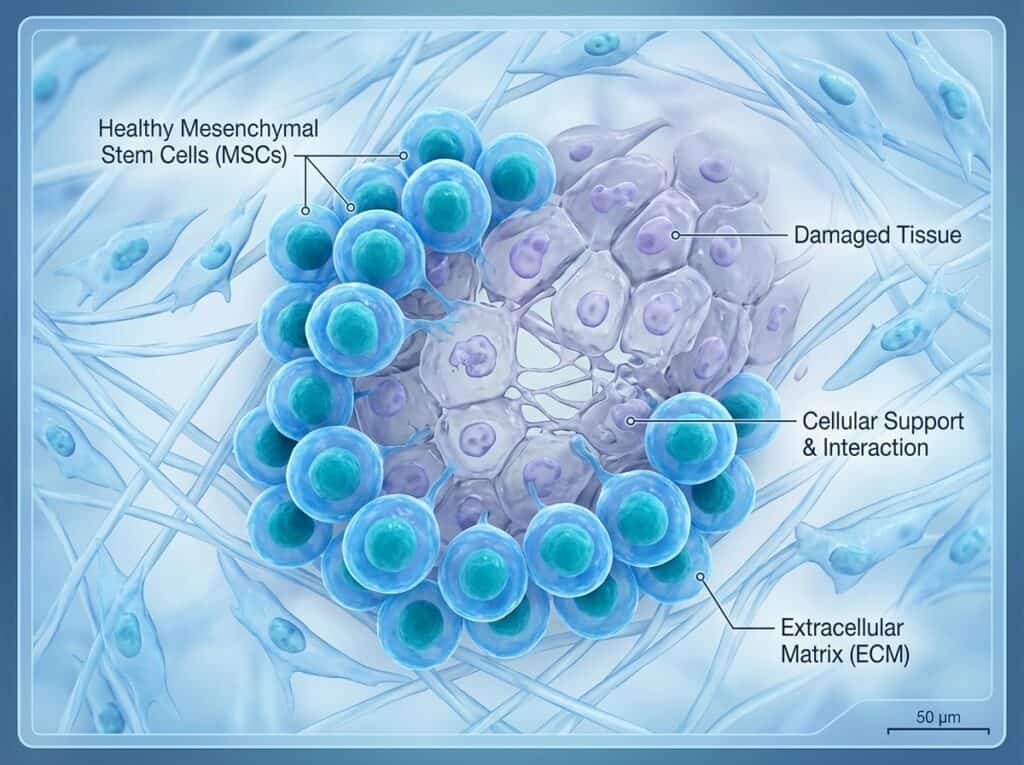
Research on MUSE cells describes a tendency for these cells to migrate specifically toward areas of tissue damage or inflammation once they’re introduced into the body, a behavior researchers refer to as “homing.” The leading explanation is that damaged tissue releases certain chemical signals that MUSE cells are able to detect and follow. This homing behavior is an active area of ongoing study, and while it’s a well-documented feature in the research literature, exactly how consistently it occurs in every clinical scenario is still being worked out by the broader scientific community.
How Are MUSE Cells Used at The Goswami Clinic?
Our practice offers autologous — meaning sourced from your own body — bone-marrow- and fat-derived stem cell therapy, and the mesenchymal cell population collected through that process naturally includes a MUSE cell subpopulation. This autologous approach is used across our joint injection and spine-focused treatments, where the goal is to deliver a patient’s own reparative cells directly to the affected area rather than relying on a donor-derived or lab-manufactured product.
What Does Current Research Say About MUSE Cell Applications?
MUSE cells have drawn research interest across a range of fields well beyond orthopedics, including work related to neurological and cardiac tissue, reflecting how broadly researchers see potential applications for this cell type. A 2023 review in Biomedicines set out to organize the first structured survey of MUSE cell applications that have actually been tested in regenerative medicine — a useful reference point precisely because it separates what has been studied from what has only been proposed.
Within orthopedic and regenerative medicine specifically, the research base continues to grow, though — as with stem cell therapy generally — it remains an active and evolving field rather than one with a single, settled conclusion. Because new research is published regularly, the most current understanding of MUSE cell applications is best discussed directly with your physician rather than relied on from any single article, including this one.
For patients evaluating treatment options, the practical takeaway is less about memorizing every research detail and more about confirming that a provider stays current with the literature and can explain, in plain terms, how their specific protocol relates to what’s been published. A physician who can walk you through that connection — rather than simply asserting that a treatment works — is generally demonstrating the kind of scientific engagement worth looking for in this field.
What Should You Ask Before Considering MUSE Cell-Based Treatment?
It’s worth asking any provider a few direct questions: where the tissue is sourced from, how the cells are processed, the physician’s specific experience with the technique, and the current FDA status of the treatment. Our physician’s background — including a practice built around training other physicians in regenerative techniques — is detailed on our About page.
These are also reasonable questions to ask about any regenerative treatment, not just one involving MUSE cells specifically — the goal is simply to leave a consultation with a clear, honest picture of what’s being offered, how it’s sourced, and why it’s being recommended for your particular condition.
Frequently Asked Questions
Are MUSE cells FDA-approved?
No MUSE cell-based product currently holds FDA approval for orthopedic use. Research, including clinical studies, is ongoing. See the required disclosure above for more detail.
Where do MUSE cells come from in an autologous treatment?
They occur naturally within your own bone marrow or fat tissue and are collected as part of that tissue sample — no donor material is involved.
Is MUSE cell therapy the same thing as regular stem cell therapy?
MUSE cells are a specific, naturally occurring subpopulation within the broader mesenchymal stem cell-rich tissue used in standard autologous stem cell therapy — they’re not a separate donor product or a different procedure.
Who discovered MUSE cells?
MUSE cells were first described in 2010 by a research group led by Dr. Mari Dezawa at Tohoku University in Japan, and they’ve since become the subject of an active and growing body of research worldwide.
Are MUSE cells the same in every patient?
No. Individual biology varies, and factors such as age and overall tissue health may influence the quantity and characteristics of the cells collected from any given patient. This is one reason treatment plans are individualized rather than standardized.
Is MUSE cell research still ongoing?
Yes. MUSE cells remain an active area of research across multiple fields, with new studies published regularly, and the overall body of evidence has grown substantially since they were first described. Because the science continues to develop, the most current understanding is best obtained directly from your physician rather than any single article, including this one.
Interested in learning whether an autologous, MUSE cell-inclusive treatment fits your condition? Schedule a free phone consultation with our team.