

Advanced Regenerative Medicine
Advanced Regenerative Medicine
- The Goswami Clinic
Is Stem Cell Therapy Safe?
When performed by a qualified physician using a patient’s own (autologous) cells under image guidance, stem cell therapy generally carries a favorable safety profile compared to more invasive surgical options. Like any medical procedure, it isn’t entirely risk-free, and it has not been evaluated by the FDA for most orthopedic applications.
Contact Us
What Are the Main Safety Considerations With Stem Cell Therapy?
As with any injection-based procedure, the main considerations are injection-site reactions such as soreness or swelling, and infection risk, which is minimized through sterile technique. Because most orthopedic protocols don’t involve incisions or general anesthesia, many of the risks associated with traditional surgery — such as surgical-site infection or anesthesia complications — simply don’t apply in the same way, though every procedure still carries some level of risk that’s worth discussing directly with your physician.
Less common risks that are still worth understanding include the possibility of a reaction at the tissue-harvest site (for example, where bone marrow or fat is collected), and, in general terms, the small risk inherent in inserting any needle near a joint or the spine. Your physician should be willing to walk through these considerations with you individually rather than brushing past them.
Contact Us
Does It Matter Whether the Cells Are Your Own?
Yes, generally. Autologous treatment — using your own cells, typically from bone marrow or fat — tends to carry a lower risk of immune reaction or rejection than products derived from a donor source, since the material is biologically your own. This is one of the first questions worth asking any provider you’re evaluating, and a straightforward answer is a good early signal about how transparent that provider is likely to be about everything else.
What Role Does Image Guidance Play in Safety?
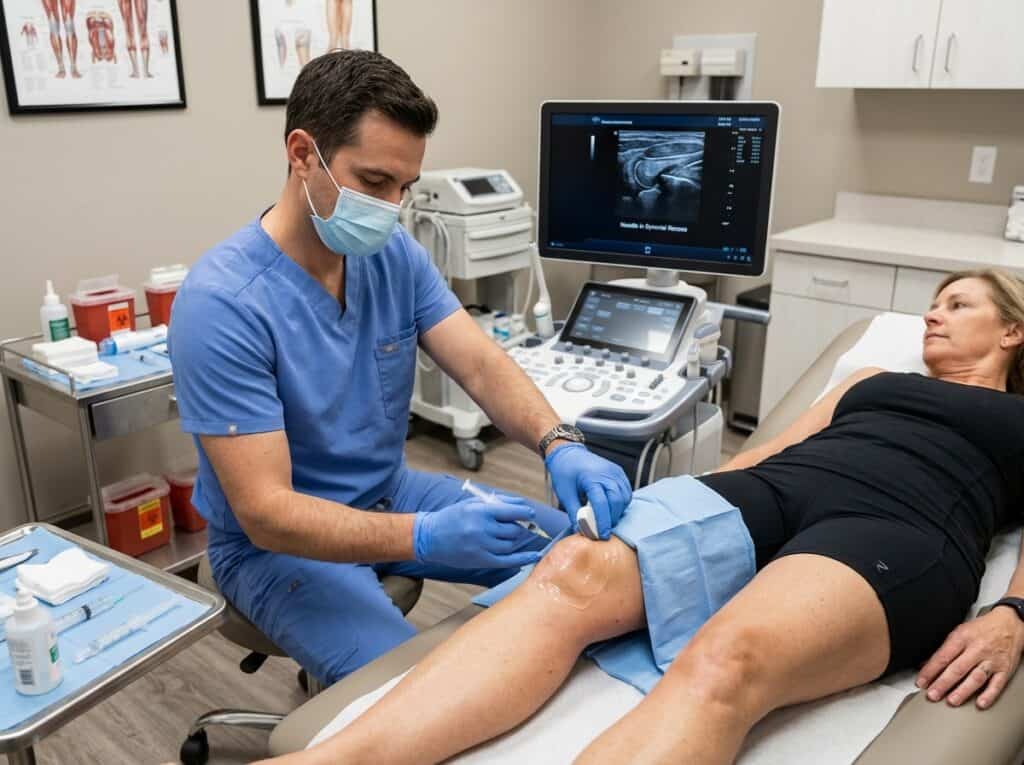
Ultrasound or fluoroscopic guidance helps the physician confirm precise placement of the injection into the target tissue, whether that’s a joint addressed through stem cell joint injections or a spine-related treatment. Precise placement matters both for safety — helping the physician avoid nearby nerves or blood vessels — and for giving the treatment the best chance of reaching the tissue it’s meant to support. A practice that routinely uses imaging for these injections, rather than placing them by feel, is generally following a more rigorous standard of care.
What Does “Not FDA-Approved” Actually Mean for Safety?
This phrase understandably raises questions, so it’s worth explaining plainly. The FDA approval pathway that applies to most new drugs typically requires large, standardized clinical trials. Many autologous, minimally manipulated procedures — including much of orthopedic stem cell therapy — fall under a different regulatory framework for human cells and tissue products, which has not required that same large-scale approval process.
That distinction doesn’t automatically mean a treatment is unsafe, but it does mean the same rigorous, standardized efficacy and safety trials required for drug approval haven’t been completed for most orthopedic stem cell procedures. The FDA’s consumer alert on regenerative medicine products states this directly, noting that none of these products have been approved for the treatment of orthopedic conditions such as osteoarthritis, tendonitis, disc disease, or joint pain, and encouraging patients to ask questions and report any adverse events.
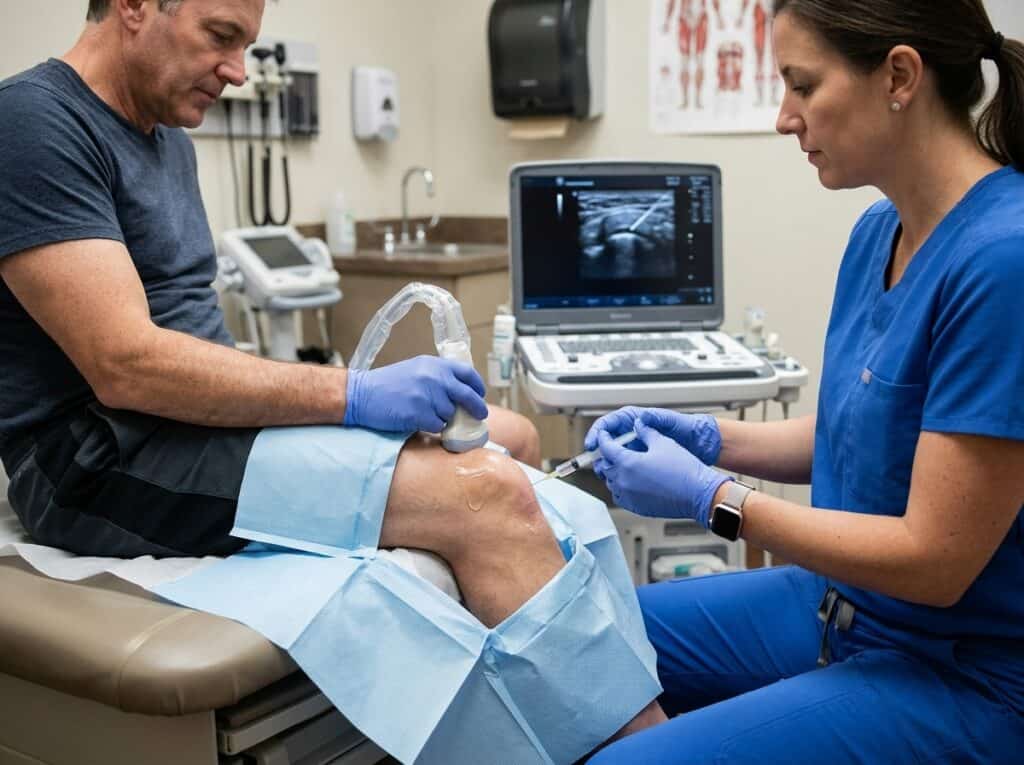
Independent research reflects a similar caution. A Cochrane living systematic review on stem cell injections for knee osteoarthritis was undertaken specifically to assess both the benefits and the harms of these injections, noting that uncertainty remains in both directions. Reading sources like these before treatment is one of the better ways to arrive at a consultation with well-informed questions.
That’s precisely why disclosure laws like California’s exist — so patients can make an informed decision with accurate information about a treatment’s regulatory status, rather than assuming FDA clearance where none exists. It’s also worth knowing that many well-established, everyday orthopedic procedures similarly fall outside the FDA’s drug-approval pathway without that meaning they’re unregulated or unsafe; the framework is simply different from the one most people are used to hearing about for new medications.
What Should You Expect Immediately After Treatment?
Most patients are able to go home the same day, often within an hour of the procedure. It’s common to be advised to rest the treated area for a short period, avoid strenuous activity for a few days, and watch for any signs of an unusual reaction at the injection site — such as significant redness, warmth, or fever — which your physician will ask you to report promptly if they occur.
Having a clear, written set of after-care instructions, rather than a verbal summary you have to remember on your own, is a reasonable thing to expect from any clinic performing these procedures. A follow-up appointment, whether in person or by phone, is also a normal part of monitoring how you’re doing in the days and weeks afterward.
How Can You Evaluate a Clinic’s Safety Practices?
A few practical questions can help you gauge how seriously a clinic treats safety: Is the procedure performed in a clean, appropriately equipped setting with single-use, sterile supplies? Is the injection actually performed by the physician, rather than delegated to unsupervised staff? Is the practice willing to discuss its safety protocols and how it handles complications, openly and specifically, rather than in vague reassurances? Clinics that answer these questions readily and in detail are generally the ones taking safety seriously as a standard practice rather than an afterthought.
Who Might Need to Avoid Stem Cell Therapy?
Certain factors — such as an active infection, certain types of cancer, or pregnancy — may make someone a poor candidate for stem cell therapy, though this always requires an individualized medical evaluation rather than a general rule. This is exactly the kind of question to raise during an initial consultation with your physician, before any treatment is planned.
Some medications, including certain blood thinners, may also need to be adjusted temporarily around the time of the procedure, which is why a complete medication list and health history are typically reviewed well before treatment is scheduled — not for the first time on the day of the appointment itself.
Frequently Asked Questions
What are the most common side effects of stem cell therapy?
Temporary soreness, swelling, or bruising at the injection site are the most commonly reported effects, typically resolving within a few days.
Is stem cell therapy riskier than surgery?
It’s generally considered less invasive, since there’s no incision and typically no general anesthesia involved — but every treatment carries some risk, and the right choice depends on your specific condition and goals. This is worth discussing individually with your physician rather than assuming one option is automatically safer for every patient.
How can I tell if a stem cell provider is qualified?
Look for board certification in a relevant specialty, verifiable training in cell-based procedures, and transparency about FDA status. You can learn more about our physician’s credentials on our About page and our physician training program.
Can stem cell therapy cause an infection?
Infection is a possible risk with any injection, but it’s minimized substantially through sterile technique and single-use supplies. Reputable clinics follow strict protocols specifically to keep this risk as low as possible.
Is autologous stem cell therapy regulated differently than donor-based therapy?
Generally, yes, though the regulatory landscape is complex and continues to evolve. Ask your provider directly about the specific rules that apply to the exact treatment you’re considering, including whether it involves your own cells or a donor-derived product.
Do I need to stop any medications before stem cell therapy?
Possibly, depending on the medication. Certain blood thinners and anti-inflammatory medications are sometimes adjusted temporarily around the time of treatment, which is why your physician will review your full medication list well in advance rather than waiting until the day of the procedure.
Have questions about safety for your specific condition? Schedule a free phone consultation with our team.